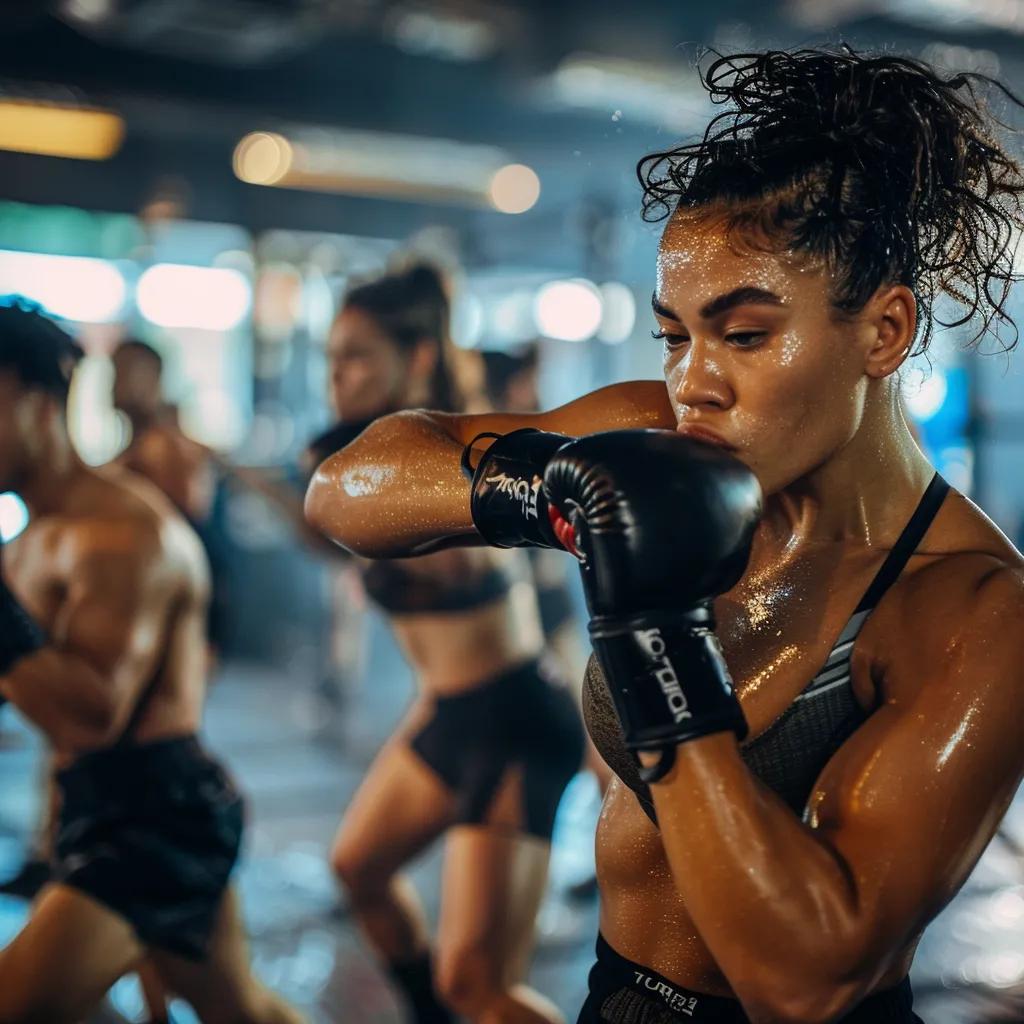
Kickboxing vs Boxing for Fitness: Key Differences, Benefits & How to Choose
Kickboxing vs Boxing for Fitness: Which Should You Start With?

Both kickboxing and boxing are combat-sport-based fitness paths that deliver intense cardiovascular conditioning, strength gains, and improved coordination, and this guide helps you choose the best starting point for your goals. You will learn clear definitions of each sport, how they differ technically and physiologically, head-to-head comparisons of calorie burn and muscle engagement, and evidence-backed notes on cardiovascular and mental-health benefits. Many readers struggle to decide whether to prioritize upper-body skill and footwork or pursue a full-body, high-calorie-burn routine; this article provides practical decision criteria and beginner-friendly next steps. It also maps a realistic progression for novices and shows how to try either option in person with a local fitness provider. The sections that follow define boxing and kickboxing techniques, compare calorie and muscle outcomes with tables, examine endurance and flexibility gains, evaluate beginner learning curves, explore mental-health benefits, and finish with goal-based recommendations and local starting steps. Throughout, keywords like kickboxing vs boxing for fitness, kickboxing workout benefits, and boxing for beginners are woven into actionable, science-informed guidance to help you start training confidently.
What Are the Key Differences Between Kickboxing and Boxing?
Kickboxing and boxing differ primarily in the allowed strikes and the resulting movement demands: boxing focuses on hand strikes, footwork, and head movement, while kickboxing adds kicks, knees, and greater hip rotation for full-body engagement. This technical divergence changes training emphases—boxing drills concentrate on precision, timing, and upper-body power, whereas kickboxing routines layer leg conditioning, flexibility work, and more dynamic range management. Both sports use interval-style training, mitt work, and bag rounds, but kickboxing sessions typically include additional mobility and kicking drills. Understanding these core contrasts clarifies why the fitness outcomes—calorie burn, muscle activation, and mobility—diverge between the two modalities and helps frame the specific drill types described next.
What Is Boxing and What Techniques Does It Involve?
Boxing is a combat sport centered on punching combinations, defensive footwork, and head movement; it builds explosive upper-body power and fine motor timing through repetitive, high-intensity striking and footwork drills. Primary punches in boxing include the jab, cross, hook, and uppercut, and training emphasizes stance, weight transfer, and angle creation to maximize force and defense. Typical drills combine shadowboxing for technical refinement, heavy-bag rounds for power and pacing, and mitt work for timing and partner feedback. These methods produce rapid improvements in coordination and anaerobic conditioning, and they also create a clear foundational progression for beginners who can focus on a smaller set of techniques before adding complexity. Next, kickboxing expands this toolkit by integrating leg strikes and different balance demands.
What Is Kickboxing and What Are Its Core Techniques?
Kickboxing incorporates punches with a broader set of kicks and knee strikes, demanding more hip mobility, balance, and whole-body coordination than boxing. Common kicks include the roundhouse, front (push) kick, and low kick, and classes integrate punch-kick combinations that develop synchronized torso rotation and single-leg stability. Typical training includes dynamic warm-ups, technical drilling on pads, bag sequences that mix high-intensity intervals and longer aerobic rounds, and flexibility-focused cooldowns to preserve joint range of motion. For fitness-focused participants, kickboxing’s combination of upper- and lower-body striking increases overall energy expenditure and functional strength, while also raising the bar on balance and flexibility requirements compared to pure boxing.
How Do Kickboxing and Boxing Compare for Fitness Benefits?

Kickboxing and boxing both offer substantial fitness returns, but they differ in how they distribute workload across muscle groups and in typical calorie expenditure per session. Boxing tends to concentrate on upper-body power, core rotation, and quick footwork intervals that develop anaerobic capacity and punching economy. Kickboxing adds significant lower-body involvement—hips, glutes, and quads—so the metabolic cost per hour often increases and mobility improvements are more pronounced. These distinctions matter when your primary goal is calorie burn, muscle toning, or sport-specific skill acquisition, and the tables below quantify calorie ranges and muscle engagement so you can compare them objectively before reading the sections on cardiovascular outcomes.
Which Burns More Calories: Kickboxing or Boxing?
Kickboxing generally burns more calories per hour than boxing because it recruits large lower-body muscle groups during kicks and footwork, increasing overall metabolic demand. Recent practice-based estimates place boxing sessions in the 500–800 kcal/hr range depending on intensity and class format, while kickboxing sessions commonly register around 600–900 kcal/hr, with very intense circuits exceeding those figures. Class structure matters: steady-technique rounds produce lower totals than continuous, high-intensity bag or circuit work, and individual baseline metabolic rate and body mass further modify energy expenditure. The table above quantifies these typical ranges and highlights why full-body striking leads to higher caloric output for comparable workout durations. Next, we examine how muscle engagement patterns differ and what that means for strength and toning.
A study examining the effects of kickboxing training on physical fitness found significant improvements in various physical variables.
Effects of Kickboxing Training on Physical Fitness SummaryAim:the purpose of this study was to examine the effect of kickboxing training on physical fitness.Methods:30 subjects were randomized into a kickboxing-group (n=15) and control group (n=15). Each group trained approximately 1-hour per day, three-times per a week during five weeks. Muscle-power (upper-body: bench-press-test, medicine-ball-test; lower-body: squat-jump and counter-movement-jump-test), flexibility, speed and agility, aerobic (progressive maximal exercise test), anaerobic fitness (Wingate test) and body composition were assessed before and after the training period.Results:the kickboxing group showed significant improvement (p < 0.05) in upper-body muscle power, aerobic power, anaerobic fitness, flexibility, speed and agility after training whereas body composition, squat jump and counter movement jump (height, power and velocity components) did not change for both groups.Conclusion:kickboxing-practice was effective to change many physical variables. Thus, this acti The effects of five weeks of kickboxing training on physical fitness, I Ouergui, 2014
How Do Muscle Engagement and Strength Building Differ?
To compare muscle activation systematically, the table below lists primary and secondary muscle groups trained by each sport and notes implications for strength development. This framing clarifies how consistent participation in each discipline translates to different functional strength outcomes over time.
Boxing(Shoulders, chest, triceps, core)
Legs engaged for footwork and power transfer
Kickboxing(Quadriceps, glutes, hip rotators, core)
Shoulders and arms used for punch-kick combinations
Combined combat fitness(Core stabilizers, rotator chain, posterior chain)
Improves overall functional strength and balance
What Are the Cardiovascular and Endurance Benefits of Kickboxing vs Boxing?
Both sports deliver strong cardiovascular adaptations through interval-style work, with training protocols that improve VO2 capacity, lower resting heart rate, and enhance metabolic efficiency. Boxing sessions typically mix short, intense striking intervals with technical rest periods, which builds anaerobic power and repeated-sprint ability. Kickboxing classes often layer sustained kicking and bag intervals that add aerobic load and increase the time spent at elevated heart rate, promoting steady-state and interval cardiovascular improvements. These mechanisms explain why consistent participation in either sport improves endurance, but the magnitude and specific metrics differ and are summarized in the table below.
Cardiovascular metric comparison table showing typical improvement ranges reported in recent literature:
How Does Each Sport Improve Cardiovascular Fitness?
Each sport improves cardiovascular fitness primarily through interval stimulus: repeated high-effort strikes and rounds elevate heart rate and recruit fast-twitch fibers while recovery periods maintain metabolic stress needed for adaptation. Boxing’s short, explosive rounds and technical rests favor anaerobic power and speed endurance, improving repeated-sprint ability and rapid recovery between efforts. Kickboxing’s inclusion of leg-dominant work lengthens sustained heart-rate elevation, supporting both aerobic capacity and muscular endurance; it often produces higher time-at-threshold during typical classes. To maximize cardio gains, program sessions with a mix of high-intensity interval rounds, longer bag circuits, and progressive overload across weeks to push VO2 and temporal endurance metrics. The next subsection discusses flexibility, balance, and coordination outcomes that differ between the two sports.
How Do Kickboxing and Boxing Develop Flexibility, Balance, and Coordination?
Kickboxing imposes greater flexibility and single-leg balance demands because effective kicks require hip range of motion and controlled weight transfer, while boxing places a premium on footwork, timing, and bilateral coordination. Training drills for kickboxing commonly include dynamic hip openers, single-leg balance holds, and mobility sequences integrated into warm-ups to preserve kicking range. Boxing develops rapid neuromuscular coordination through ladder footwork, defensive slips, and rhythm-focused mitt sequences that refine timing and proprioception. Practical drills—such as alternating high-low kick sets for kickboxing or progressive footwork ladder routines for boxing—deliver targeted improvements in each domain and can be used in cross-training to address deficits identified in testing.
Which Sport Is Easier to Learn for Beginners: Kickboxing or Boxing?
For many beginners, boxing offers a gentler initial learning curve because it focuses on a smaller set of core techniques and emphasizes progressive mastering of punches and footwork before increasing complexity. Boxing drills commonly start with stance, jab mechanics, and simple combinations, which lets novices build confidence and measurable skill quickly. Kickboxing adds striking complexity with kicks and greater mobility needs, which can extend the initial learning period and raise technical and injury-mitigation requirements. Safety considerations and a structured progression—beginning with drilling basics and adding controlled kicking mechanics—reduce risk and accelerate safe advancement for new trainees in either discipline.
What Makes Boxing More Beginner-Friendly?
Boxing is often seen as more beginner-friendly because its technique set is narrower and repeatable, letting learners focus on mastering one skill cluster at a time and building clear milestones. Foundational drills such as shadowboxing for stance and basic bag rounds for power let beginners improve without the immediate flexibility demands of kicking. Trainers commonly use progressive complexity—starting with jab-cross repetition, then adding defensive movement and combinations—to scaffold learning and reinforce motor patterns. This structured approach reduces early frustration and helps newcomers see visible skill and conditioning gains quickly, creating positive reinforcement that encourages adherence.
What Challenges Do Beginners Face in Kickboxing?
Beginners in kickboxing face added technical complexity because effective kicks require hip mobility, balance, and integrated timing between hands and legs, increasing the potential for early technical errors and muscle strain. Common beginner mistakes include overcommitting on kicks, poor guard while attacking, and insufficient hip rotation, which can reduce power and elevate injury risk. A stepwise progression—starting with light, guided kicking drills on pads, gradual flexibility routines, and controlled sparring-free bag work—helps novices build the necessary range of motion and coordination safely. This staged approach mitigates risk while preserving the high-calorie-burn and conditioning benefits that make kickboxing attractive.
How Do Kickboxing and Boxing Support Mental Health and Stress Relief?

Both boxing and kickboxing produce meaningful mental-health benefits through mechanisms like endorphin release, focused movement that supports mindfulness-by-action, and mastery experiences that increase self-efficacy. High-intensity striking provides cathartic stress release and physiological regulation, while structured skill progression builds discipline and confidence that generalize to daily life. Group class contexts add social support, which further amplifies stress-buffering effects, and sport-specific mastery creates measurable competence that supports long-term mood benefits. Understanding these psychological pathways helps you use classes deliberately for stress management, cognitive focus, and emotional resilience while training.
What Mental Health Benefits Does Boxing Offer?
Boxing cultivates mental focus, discipline, and cognitive engagement through concentrated technical practice and fast decision-making under pressure, producing acute reductions in perceived stress and improvements in mood. The sport’s demand for attention to timing and spacing functions as an active form of mindfulness that diverts rumination and channels physiological arousal into structured activity. Progressive skill acquisition—measurable improvements in combinations, footwork, and defensive responses—boosts self-efficacy and resilience, while repeated high-intensity rounds stimulate endorphin and neurotransmitter responses associated with elevated mood. These mechanisms explain why many practitioners report clearer thinking and reduced stress after consistent training.
How Does Kickboxing Help Reduce Stress and Boost Confidence?
Kickboxing offers a full-body release that many participants experience as both physically cathartic and empowering, because learning diverse striking techniques expands perceived capability and bodily agency. The combined aerobic and anaerobic workload rapidly reduces stress hormones, while mastery of front kicks, roundhouses, and integrated combinations produces tangible progress that builds confidence. Group class dynamics foster camaraderie and mutual encouragement, which strengthens social support networks and enhances adherence. Using progressive, attainable milestones—such as mastering a safe roundhouse or sustaining a timed bag circuit—helps translate technical gains into lasting confidence improvements.
Which Should You Start With Based on Your Fitness Goals?
Choosing between boxing and kickboxing depends on whether you prioritize upper-body skill and footwork or full-body, high-calorie-burn routines; the lists below map common goals to the sport that typically delivers the best outcomes. Use these decision cues to align weekly training frequency and class formats with your target outcomes, and consider hybrid approaches if you want both skill and full-body conditioning.
After these practical decision maps, there is a brief note about an in-person option to try either sport locally if you prefer guided, beginner-friendly classes.
Boxing is a strong match for these goals:
Upper-body power and core-focused skill development: Prioritizes punching mechanics and rotational strength.
Rapid skill acquisition and technical practice: Simplified technique set eases early learning.
Speed, timing, and footwork improvement: Emphasizes neuromuscular coordination and quick recovery between efforts.
Kickboxing is a strong match for these goals:
Full-body conditioning and higher calorie burn: Engages legs and hips in addition to upper body.
Improved flexibility, balance, and functional lower-body strength: Requires and develops hip mobility.
Varied, dynamic workouts for weight-loss goals: Mixes kicking, punching, and sustained bag work.
For readers ready to try in-person training, Grinders Fitness Gym offers beginner-friendly kickboxing and boxing classes suited to both pathways and can help you sample each approach through guided sessions before committing to a longer program.
When to Choose Boxing for Fitness and Skill Development
Choose boxing when your main focus is developing upper-body striking skill, concise technical progression, and speed-based conditioning, because its narrower technique set allows you to concentrate practice volume on punches and footwork. A sample initial weekly progression might include three sessions: two technique-focused classes emphasizing jab, cross, and footwork drills, plus one conditioning session of bag intervals to build anaerobic endurance. Beginners should prioritize consistent skill practice, controlled sparring-free mitt work, and progressive load increases to build power safely. This approach produces steady technical gains and a measurable increase in punching economy and cardiovascular performance.
When to Choose Kickboxing for a Full-Body Workout and Higher Calorie Burn
Choose kickboxing if your priority is full-body conditioning, higher per-session calorie burn, and improvements in lower-body strength and mobility, because the sport’s kicking mechanics recruit large muscle groups and elevate metabolic demand. A sample starter week could include two mixed kickboxing classes focusing on pad work and bag circuits, plus one mobility session to support hipflexibility and injury prevention. Beginners benefit from light, technical pad drills before advancing to continuous circuit rounds, gradually increasing intensity to avoid overuse. This progression yields strong conditioning adaptations, greater caloric expenditure, and improved balance and coordination.
How Can You Get Started with Kickboxing or Boxing at Grinders Fitness Gym?
Grinders Fitness Gym runs beginner-friendly classes for both kickboxing and boxing that are structured to introduce technique safely, build conditioning progressively, and offer trainer support during early sessions. Expect sessions that blend warm-up mobility, technical drilling (stance, basic strikes, defense), controlled bag or pad sequences for conditioning, and cooldowns focused on mobility and recovery. Since schedules and pricing are not provided here, contact the gym directly to confirm class times, trial options, and any introductory packages; trainers typically adapt drills for varying skill and fitness levels to accelerate safe progress.
The practical steps below outline what to expect and how to prepare for your first visit.
What to expect and how to prepare:
Arrive ready to move: Wear supportive athletic shoes and moisture-wicking clothing suitable for striking and footwork.
Bring basic gear if you have it: Hand wraps and comfortable gloves help during hitting drills, though gyms often provide loaner equipment.
Plan for a guided warm-up and technique focus: First sessions usually prioritize stance, basic combinations, and supervised bag work to establish fundamentals.
Communicate goals with the trainer: Letting coaches know if you want weight loss, skill focus, or mobility work helps them tailor the class.
What Beginner-Friendly Kickboxing Classes Does Grinders Fitness Offer?
Grinders Fitness Gym offers kickboxing classes aimed at fitness and skill development that follow a clear beginner progression and emphasize safety, technical drilling, and conditioning. Typical beginner-class structure includes a dynamic warm-up to prime hips and shoulders, short technical stations for kicks and punches, supervised bag or pad intervals focused on timing and power, and a cooldown with mobility work to protect joints. New participants should expect coaches to scale intensity and provide progressions for kicks to build balance and hip mobility gradually, with emphasis on learning correct mechanics before adding speed or power. If you want exact times or to reserve an introductory session, reach out to Grinders Fitness Gym to confirm current offerings and trial availability.
What Boxing Training Programs Are Available for Beginners at Grinders Fitness?
Grinders Fitness Gym provides boxing training programs for beginners that center on stance, basic punches, footwork, and conditioning in a supportive group environment designed to build technique and fitness concurrently. A typical beginner boxing session includes coached shadowboxing for mechanics, mitt or pad work for timing and feedback, bag rounds for power and pacing, and partner drills or mobility routines to reinforce balance and recovery. Trainers generally recommend a month-long introductory focus on foundational skills before progressing to higher-intensity circuits or sparring, helping novices establish safe movement patterns and measurable conditioning gains. To learn precise class options and how to schedule a first-session trial, contact Grinders Fitness Gym directly for the most current guidance and availability.
Frequently Asked Questions
1. Can I switch between kickboxing and boxing during my fitness journey?
Absolutely! Many fitness enthusiasts find value in cross-training between kickboxing and boxing. Switching between the two can enhance overall fitness, as each discipline targets different muscle groups and skills. Kickboxing offers a full-body workout with a focus on lower-body strength and flexibility, while boxing emphasizes upper-body power and footwork. This variety can prevent workout monotony and help you achieve a well-rounded fitness level. Just ensure to communicate your goals with your trainers to tailor your sessions effectively.
2. What equipment do I need to start kickboxing or boxing?
To begin kickboxing or boxing, you'll need some basic equipment. For boxing, a good pair of boxing gloves, hand wraps, and comfortable athletic shoes are essential. Kickboxing requires similar gear, but you may also want shin guards for added protection during kicks. Many gyms provide loaner equipment for beginners, so check with your local facility. As you progress, investing in personal gear can enhance your training experience and ensure a better fit for your needs.
3. How often should I train to see results in kickboxing or boxing?
For optimal results in kickboxing or boxing, aim to train at least 2-3 times per week. Consistent practice helps build technique, strength, and cardiovascular fitness. Beginners may start with two sessions focusing on skill development and one conditioning class. As you progress, increasing the frequency to four or more sessions can enhance your fitness gains and skill acquisition. Remember, rest and recovery are equally important, so listen to your body and allow time for muscle recovery.
4. How do I know if kickboxing or boxing is right for my fitness level?
Determining whether kickboxing or boxing is right for you depends on your fitness goals, preferences, and current fitness level. If you prefer a full-body workout with dynamic movements, kickboxing may be ideal. Conversely, if you want to focus on upper-body strength and technique, boxing could be a better fit. Many gyms offer introductory classes or trial sessions, allowing you to experience both disciplines before committing. Consulting with trainers can also help you assess your goals and choose the best path.
5. What should I expect during my first kickboxing or boxing class?
During your first kickboxing or boxing class, expect a structured session that includes a warm-up, technical drills, and conditioning exercises. Instructors will guide you through basic techniques, such as punches or kicks, and emphasize proper form to prevent injury. Classes typically incorporate bag work and partner drills to practice skills in a supportive environment. Don't worry if you feel overwhelmed; everyone starts somewhere, and trainers are there to help you progress at your own pace.
Conclusion
Choosing between kickboxing and boxing can significantly impact your fitness journey, as each offers unique benefits tailored to different goals. Both sports enhance cardiovascular health, strength, and coordination, making them excellent choices for overall fitness improvement. If you're ready to take the next step, consider trying a class at Grinders Fitness Gym to experience the benefits firsthand. Discover which discipline aligns best with your aspirations and start your training today!
