Family Fitness in Northglenn: Safe & Scalable Workouts for Parents & Teens
Family Fitness in Northglenn: Safe, Scalable Workouts Parents & Teens Can Do

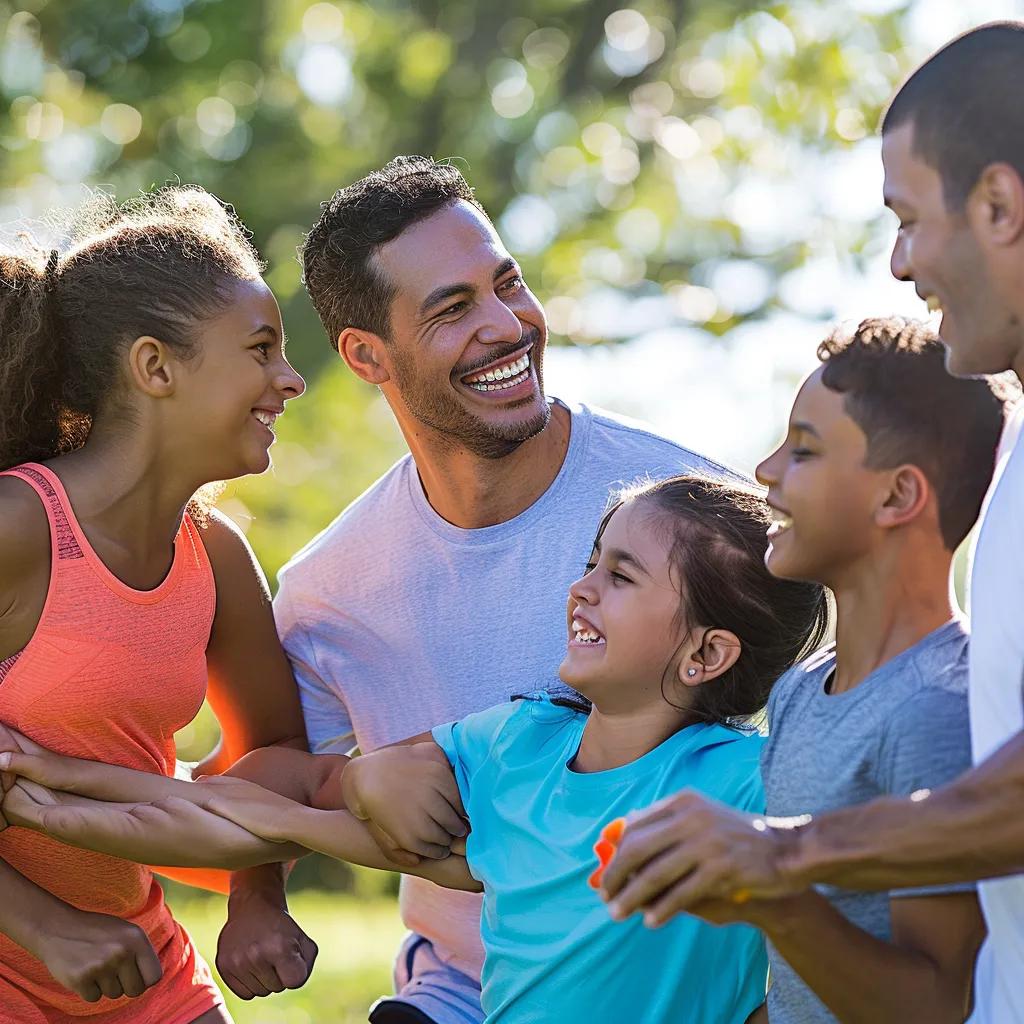
Family fitness in Northglenn brings parents and teens together for safe, age-appropriate exercise that builds health, confidence, and connection. This article explains what family fitness means in practical terms, why safety and scalability matter for mixed-age groups, and how families in Northglenn can structure workouts that match different abilities while staying injury-free. You will learn concrete benefits across physical, mental, and social domains, clear examples of regressions and progressions for common movements, and actionable session plans parents and teens can complete side-by-side. The guide also details teen-focused programming, trainer roles and safety protocols families should expect, and step-by-step starting actions to try local family-friendly classes. Read on to find evidence-informed routines, tables summarizing measurable outcomes and modifications, and local context about how community fitness options in Northglenn support lasting healthy habits for parents and teens.
What Are the Key Benefits of Family Fitness for Parents and Teens in Northglenn?
Family fitness brings measurable gains in physical health, mental wellness, social connection, and sustainable behavior change for both parents and teens. Shared exercise reduces sedentary time and improves cardiovascular fitness through joint aerobic activities, while strength-building sessions lower injury risk and support daily function across age groups. Beyond physiology, family workouts promote mood regulation and stress reduction via endorphin release and shared accomplishment, and they create a reliable context for modeling healthy choices that teens are more likely to adopt. These combined outcomes make family fitness a practical public-health approach for Northglenn households seeking structured, scalable activity that fits busy family schedules.
Family fitness offers several top-line benefits that translate directly to daily life for parents and teens:
Improved cardiovascular health: Regular aerobic sessions lower resting heart rate and increase endurance.
Strength and mobility gains: Progressive resistance training increases functional strength for chores, sports, and injury prevention.
Better mental health: Exercise decreases anxiety and improves mood through neurochemical regulation.
Stronger family bonds: Cooperative goals and shared routines enhance communication and accountability.
The list above captures the primary benefits families can expect; the next subsection explains how shared challenges and intentional communication during workouts strengthen relationships.
How Does Family Fitness Strengthen Bonds and Improve Communication?
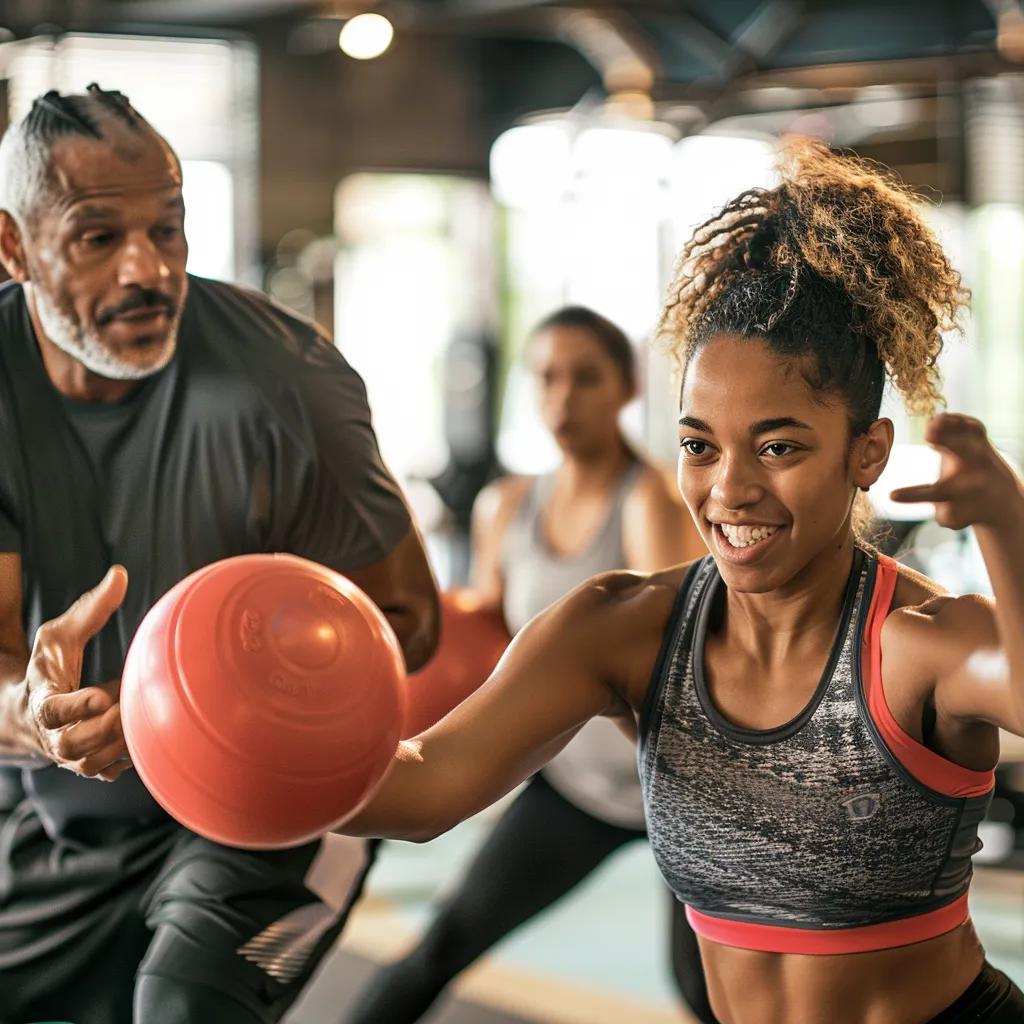
Family fitness strengthens bonds because collaborative tasks and partner drills create repeated opportunities for encouragement, feedback, and mutual problem-solving. When parents and teens set small, measurable goals—like adding five minutes to a walk or learning a movement pattern together—they share a concrete metric for praise that reinforces trust and opens conversational space. Structured activities such as partner circuits or relay-style challenges encourage turn-taking and positive reinforcement, which often transfers to non-exercise interactions at home. To put this into practice, families can assign simple roles (coach, timer, form-checker) and rotate responsibilities each session so everyone experiences leadership and support, reinforcing communication patterns that extend beyond the gym.
Transitioning from relational gains to health outcomes, the next subsection summarizes the specific physical and mental wellness benefits that families achieve through regular joint exercise.
What Health and Mental Wellness Benefits Do Family Workouts Provide?
Family workouts yield measurable health improvements for both parents and teens by combining aerobic conditioning, strength training, and mobility work into a consistent routine. Aerobic activity supports cardiovascular endurance and metabolic health, while progressive resistance training increases lean mass and bone strength—important for adolescent development and adult functional capacity. Mentally, exercise reduces acute stress and elevates mood through neurotransmitter shifts, and routine activity counters sedentary behaviors that contribute to anxiety and poor sleep. Families in Northglenn who commit to 150 minutes of moderate activity per week for adults and the recommended daily activity for youths can expect improvements in energy, focus, and overall wellbeing within several weeks of consistent participation.
To make these benefits tangible and easy to reference, below links benefit areas to measurable outcomes and example metrics families can monitor.
Physical Health
Improved endurance
Example: Longer family walks with reduced breathlessness
Strength & Mobility
Increased functional strength
Example: Easier lifting of grocery bags; improved squat depth
Mental Wellness
Reduced anxiety and better mood
Example: Fewer mood-related complaints; improved sleep quality
Social/Behavioral
Better family communication
Example: Increased positive feedback during sessions
Habit Formation
Reduced screen time
Example: More active evenings; consistent workout schedule
How Does Grinders Fitness Offer Safe and Scalable Workouts for Families?
Grinders Fitness structures family offerings around progressive plans, trainer supervision, and equipment choices that allow the same session to suit varied ages and abilities. Program design starts with simple assessments to establish baseline mobility and movement competency, then applies regressions and progressions so parents and teens work on shared goals at appropriate intensities. Trainers provide demonstrations, real-time technique correction, and monitored workloads to keep sessions safe while encouraging measurable progression. This model ensures families can exercise together in the same space while each member follows a tailored progression path that reduces injury risk and maximizes engagement.
Below is a practical list of core scaling approaches used to adapt common exercises for mixed-age groups:
Regressions: Reduce range or resistance to focus on form and control.
Progressions: Add load or complexity as competence grows.
Equipment choices: Use bands, light dumbbells, and machines to match strength levels.
Session pacing: Alternate higher-intensity intervals with active recovery suited to all participants.
What Are Scalable Workout Methods for Different Ages and Fitness Levels?
Scalable workout methods rely on movement regressions, equipment selection, and progressive overload tailored to age and experience to keep parents and teens working together effectively. Trainers often start with bodyweight patterns to establish technique, then use resistance bands or light dumbbells to increase load progressively for teens developing strength while offering parents options that match their baseline. Session plans include options such as tempo changes, rep adjustments, and range-of-motion limits so that a single drill can be performed with different intensity targets. Trainers also document progressions in simple logs, allowing gradual increases that respect growth, maturation, and recovery capacity for teen athletes and adult family members alike.
Having explained scaling mechanics, the next part describes the specific safety procedures Grinders Fitness implements to protect parents and teens during mixed-age sessions.
Family-Based Physical Activity Intervention: FRESH Study Feasibility There is a need for high-quality research aiming to increase physical activity in families. This study assessed the feasibility and acceptability of FRESH (Families Reporting Every Step to Health), a child-led family-based physical activity intervention delivered online. In a two-armed randomised feasibility study, 12 families (with an 8–10-year-old index child) were allocated to a ‘child-only’ (CO) or ‘family’ arm (FAM) of the theory-based FRESH intervention. Both received access to the FRESH website, allowing participants to select step challenges to ‘travel’ to target cities around the world, log their steps, and track their progress as they virtually globetrot. Only index children wore pedometers in CO; in FAM, all family members wore pedometers and worked towards collective goals. All family members were eligible to participate in the evaluation. Mixed-methods process evaluation (questionnaires and family focus groups) at 6-week follow-up consisted of completing questionnaires assessing acceptability of the intervention and accompanying effectiveness evaluation, focussed on physical (e.g. fitness, blood pressure), psychosocial (e.g. social support), and behavioural (e.g. objectively-measured family physical activity) measures. All families were retained (32 participants). Parents enjoyed FRESH and all children found it fun. More FAM children wanted to continue with FRESH, found the website easy to use, and enjoyed wearing pedometers. FAM children also found it easier to reach goals. Most CO families would have preferred whole family participation. Compared to CO, FAM exhibited greater website engagement as they travelled to more cities (36 ± 11 vs. 13 ± 8) and failed fewer challenges (1.5 ± 1 vs. 3 ± 1). Focus groups also revealed that most families wanted elements of competition. All children enjoyed being part of the evaluation, and adults disagreed that there were too many intervention measures (overall, 2.4 ± 1.3) or that data collection took too The development and feasibility of a randomised family-based physical activity promotion intervention: the Families Reporting Every Step to Health (FRESH) study, JM Guagliano, 2019
Research indicates that family-based interventions can significantly increase engagement and adherence to physical activity goals.
How Does Grinders Fitness Ensure Safety for Parents and Teens?
Safety protocols include pre-session screening, supervised technique coaching, structured warm-ups and cool-downs, and clear intensity monitoring to prevent overuse or acute injuries in mixed-age groups. Trainers prioritize functional assessments to identify mobility limitations and then prescribe regressions or load limits before adding resistance. Age-appropriate load guidelines and technique checkpoints ensure teens develop sound movement patterns while parents build strength without excessive lumbar or joint strain. Families can expect explicit cues, hands-on corrections as appropriate, and a simple safety checklist at each session to confirm readiness to train.
Families should expect a concise safety checklist when attending sessions; this checklist clarifies expectations and creates a consistent safety culture for everyone.
Warm-up completed: Dynamic movement prep before heavier work.
Technique demonstration: Trainer shows and corrects each movement.
Intensity check: Heart rate or perceived exertion guidance for teens and parents.
Modification plan: Clear regressions/progressions for any exercise.
This checklist forms the backbone of safe family programming; next we move into teen-specific programs and outcomes offered locally.
What Teen Fitness Programs Does Grinders Fitness Provide in Northglenn?

Teen fitness programs focus on age-appropriate strength and conditioning, sport-prep circuits, and confidence-building group formats designed to teach foundational movement skills and progressive overload safely. Programming distinguishes between general youth conditioning—emphasizing movement competency, balance, and coordinated strength—and sport-specific prep that layers speed, agility, and power work once fundamentals are established. Coaches create measurable short-term targets such as improved movement scores, increased repetition counts at bodyweight exercises, or better timed sprints, which together build physical capacity and psychological confidence. Importantly, teen programs integrate with family sessions by offering parallel progressions so teens can train alongside parents while following individualized load prescriptions.
Intro Conditioning
Age/Skill Target: Early teens / new to training
Key Outcomes: Movement competency, basic strength, injury prevention
Strength & Conditioning
Age/Skill Target: Mid-teens / intermediate
Key Outcomes: Progressive strength gains, improved power and endurance
Sport-Specific Prep
Age/Skill Target: Teens in competitive sports
Key Outcomes: Enhanced speed, agility, and sport-readiness
Group Confidence Clinics
Age/Skill Target: All teens
Key Outcomes: Social support, motivation, and consistent attendanceHow Do Teen Workouts Build Strength, Endurance, and Confidence?
Teen workouts build strength and endurance through progressive overload paired with technical instruction that ensures safe adaptation of muscle and connective tissue. Programs start with mastering movement patterns—such as hinge, squat, push, and pull—before incrementally increasing resistance or volume, which promotes neuromuscular coordination and strength. Regular mastery of skills and incremental wins, like adding a few pounds or improving rep ranges, create positive reinforcement and visible progress that bolster confidence. Social aspects of small-group training further support adherence and self-efficacy, as peer modeling and coach feedback reinforce skill acquisition and motivate continued participation.
After describing outcomes, the next subsection outlines the specific safety rules and screening measures applied to teen programming.
Resistance Training for Teens Program: Reach, Effectiveness, and Implementation Physical activity guidelines recommend young people engage in regular muscle-strengthening activities (e.g., resistance training [RT]). However, few school-based physical activity interventions have been delivered at-scale or promoted RT. The aim of this study was to evaluate the reach, effectiveness, adoption, implementation and maintenance of theResistance Training for Teens(RT for Teens) program. Data were collected between August 2015 and October 2020. RE-AIM was operationalized as: (i)Reach: number and characteristics of students estimated to be exposed to the program; (ii)Effectiveness:impact of the program on student-level outcomes measured in a subsample of 750 students from 17 schools; (iii)Adoption:number and representativeness of schools with one or more teachers trained to deliver the program; (iv)Implementation:extent to which the program was delivered as intended; and (v)Maintenance:extent to which the program was sustained in schools. The estimated program reach was ~10,000 students, out of a total student population of ~200,000 (~5%). Students were from diverse socioeconomic and ethnic backgrounds. Improvements in muscular fitness, RT self-efficacy, perceived cardiorespiratory fitness and flexibility, and participation in muscle-strengthening physical activities were documented. A total of 30 workshops were delivered, involving 468 teachers from 249 schools from diverse geographical regions. Implementation varied considerably, with teachers adapting the program to suit the context of their school and student cohorts. However, RT skill development and the promotion of muscular fitness were the session components delivered most during sessions. Teachers’ adherence to the SAAFE (Supportive, Active, Autonomous, Fair and Enjoyable) teaching principles was high. Approximately 30% of teachers (144/476) registered to use the RT for Teens app. At the school-level, 37% (93/249) of schools had at least one registered user (teacher and/or student). Evaluating the reach, effectiveness, adoption, implementation and maintenance of the Resistance Training for Teens program, SG Kennedy, 2021
Studies have shown that structured resistance training programs can significantly improve muscular fitness, self-efficacy, and participation in physical activities among adolescents.
What Safety Guidelines Are Followed in Teen Fitness Programs?
Teen programs follow a checklist of safety measures including pre-participation screening, coach-to-athlete supervision ratios, progressive load limits, and technique-first instruction to minimize injury risk. Screening identifies prior injuries or mobility issues, which informs individual modifications and prevents overloading immature tissues. Coaches emphasize form correction and use conservative progression rates—small increments of load or complexity—until competency is verified. Emergency procedures and clear communication with parents about goals and expectations are standard elements that create a transparent safety framework for teen members.
These safety protocols ensure teens develop in a structured environment; next we discuss how parent-child workouts enhance motivation and habit formation.
How Can Parent-Child Workouts Enhance Family Bonding and Motivation?
Parent-child workouts enhance motivation by creating shared accountability, modeling of healthy behaviors, and establishing routine rituals that make exercise predictable and social. When parents model consistent effort and healthy choices, teens receive a powerful behavioral signal that regular activity is normal and valued. Shared goal-setting—such as weekly step targets or mastering a circuit—provides mutual accountability while partner drills and family challenges create fun, achievement-oriented moments. Over time, these repeated interactions convert ad-hoc activity into ritualized family time, lowering friction for exercise and increasing the likelihood of lifelong healthy habits.
Below are common parent-child class formats families can try to foster bonding while training together.
Partner circuits: Alternating partner work with cooperative scoring.
Family HIIT: Short intervals scaled individually for intensity and rest.
Yoga and mobility sessions: Joint flexibility, breathing, and recovery work.
Game-based fitness: Relays, obstacle courses, and skill challenges.
These class types support different family goals, and the next subsection explores how shared workouts create durable behavior change through habit science.
What Types of Parent-Child Fitness Classes Are Available?
Parent-child classes typically include partner circuits, family HIIT, yoga/mobility sessions, and cooperative games that suit different ages and group sizes while promoting interaction and mutual support. Partner circuits pair parents and teens for alternating sets that combine strength and cardio, allowing each to work at an appropriate intensity while collaborating on timing and technique. Family HIIT uses short bursts with longer recovery so teens and adults can adjust effort levels without separating groups. Yoga and mobility sessions focus on breath and body awareness and are especially useful for recovery days, while game-based formats keep engagement high for younger teens and siblings. These formats can be scheduled as standalone family classes or integrated into broader group offerings.
Understanding class formats leads naturally into behavioral mechanisms that make these sessions effective for long-term habit formation.
How Do Shared Workouts Promote Lifelong Healthy Habits?
Shared workouts promote lifelong healthy habits through modeling, consistency, and positive reinforcement that align with basic habit-formation principles. When parents consistently show up for a scheduled session, they create a stable contextual cue that triggers the workout routine for teens, turning intention into habit. Positive feedback loops—celebrating incremental improvements or marked achievements—strengthen identity-based habits, helping participants see themselves as “active people.” Practical tips families can implement include setting fixed days/times for workouts, tracking small progress metrics, and making sessions enjoyable through variety and cooperative challenges, all of which cement activity as a regular family practice.
With habit-building strategies clear, the next section explains what to expect during onboarding and the in-gym environment when joining a local family program.
What Should Families Expect When Joining Grinders Fitness in Northglenn?
Families joining Grinders Fitness should expect a structured onboarding process that includes brief movement screening, goal-setting conversations, and an introduction to class formats and safety protocols. The initial assessment focuses on mobility and baseline conditioning to place participants in appropriate groups and to document regressions and progressions. Trainers explain class structure, equipment options, and modification strategies so families know how each session will scale for parents and teens. Community-oriented scheduling and family-focused coaching help integrate workouts into weekly routines while ensuring transparency about expectations and progression.
Who Are the Expert Trainers Supporting Family Fitness Programs?
Expert trainers supporting family fitness programs act as movement coaches, safety monitors, and progress planners who translate program design into individualized actions for parents and teens. Families should expect coaches to lead warm-ups, demonstrate regressions and progressions, correct technique in real time, and adjust session loads based on observed competency. Trainers typically document progress and suggest at-home reinforcement drills to accelerate skill acquisition and confidence. Asking trainers about their experience with youth training and family programming helps families choose the right coach-match for their needs and expectations.
What Equipment and Amenities Support Family Workouts?
Family workouts rely on versatile, low-friction equipment—such as resistance bands, adjustable dumbbells, kettlebells, and open floor space—that allow easy scaling across ages and abilities. Bands provide immediate regressions for teens and parents learning movement patterns, while light dumbbells and kettlebells enable small, safe increases in resistance. Machines can offer fixed-path reductions in technical demand for earlier learners, and open space supports partner circuits and game-based formats. Amenities that aid family attendance include flexible scheduling options and clear class descriptions so families can select sessions that match their composition and goals.
Having covered expectations and facilities, the final section provides practical steps families can take to begin training together.
How Can Families Get Started with Fitness Programs at Grinders Fitness?
Getting started involves a few clear steps: assess readiness, book a trial or introductory assessment, attend an onboarding session, and commit to a short initial schedule to build routine. Begin by discussing goals as a family—what each person wants to improve—and note any mobility or health concerns to share with staff. Next, schedule a short trial class or assessment to experience class pacing, observe trainer style, and confirm appropriate scaling options. Finally, set a 4–6 week commitment to attend consistently, using small progress metrics to maintain motivation and adjust programming as needed.
Below is a simple step-by-step checklist families can follow to enroll and begin safely:
Define shared and individual goals: Clarify what parents and teens want to achieve together and separately.
Book an introductory assessment or trial: Experience class format and meet the coaches.
Complete baseline movement screening: Establish regressions/progressions and any limitations.
Commit to a 4–6 week starter plan: Attend regularly and track small progress markers.
These steps make onboarding predictable and actionable; the following paragraph explains where families should look for official program details and contact information.
What Membership Options and Trial Classes Are Available?
Typical membership structures at local family-oriented gyms include trial classes, monthly memberships with family add-ons, and short-term packages that let families test formats before committing long-term. Trial classes usually include a brief assessment and a sample session so families can judge fit and scaling options for teens and adults. When exploring membership questions, families should ask about cancellation policies, family pricing, and whether assessments or personal coaching sessions are included with new enrollments. Understanding these variables helps families choose the option that best supports sustained attendance and progressive results.
Where Can Families Find More Information and Contact Grinders Fitness?
For the most current program descriptions, schedules, and trial availability, check the official Grinders Fitness resources and local listings that detail family program times and coach profiles. Families should consult the gym’s online presence and local business listings to confirm the latest class schedules and trial options, and they can review trainer bios to match expertise with family needs. Checking recent reviews and community event calendars in Northglenn can also help families identify family-friendly sessions and community-oriented offerings. These steps ensure families have the latest information before booking an assessment or trial class.
This article has described the full pathway from benefits to beginner steps, giving families in Northglenn practical, safe, and scalable ways to exercise together and support each other’s health.
Frequently Asked Questions
What types of activities are included in family fitness programs?
Family fitness programs typically include a variety of activities designed to engage both parents and teens. These can range from aerobic exercises like running or cycling to strength training sessions using bodyweight exercises, resistance bands, or light weights. Additionally, classes may incorporate fun elements such as partner circuits, family HIIT, yoga, and game-based fitness challenges. The goal is to create a dynamic environment that caters to different fitness levels while promoting teamwork and enjoyment among family members.
How can families track their fitness progress together?
Tracking fitness progress as a family can be both motivating and rewarding. Families can set shared goals, such as completing a certain number of workouts per week or achieving specific fitness milestones. Using fitness apps or journals to log workouts, track improvements in strength or endurance, and celebrate achievements can enhance accountability. Additionally, families can create friendly competitions or challenges to encourage participation and make tracking progress a fun and engaging experience for everyone involved.
Are there specific safety measures for children during workouts?
Yes, safety measures for children during workouts are crucial to prevent injuries and ensure a positive experience. Programs typically include pre-participation screenings to assess any mobility issues or prior injuries. Trainers focus on teaching proper techniques and use age-appropriate modifications to ensure exercises are safe for younger participants. Additionally, sessions often incorporate structured warm-ups and cool-downs, as well as continuous supervision to monitor form and intensity, creating a safe environment for all family members.
What role do trainers play in family fitness sessions?
Trainers play a vital role in family fitness sessions by acting as coaches, motivators, and safety monitors. They provide guidance on proper exercise techniques, demonstrate modifications for different fitness levels, and ensure that all participants are engaged and challenged appropriately. Trainers also help set individual and family goals, track progress, and offer feedback to enhance performance. Their expertise ensures that workouts are not only effective but also enjoyable and safe for both parents and teens.
How can families maintain motivation for regular workouts?
Maintaining motivation for regular workouts can be achieved through several strategies. Setting clear, achievable goals as a family can create a sense of purpose and accountability. Incorporating variety into workouts, such as trying new classes or activities, can keep things fresh and exciting. Additionally, celebrating small victories and progress, whether through rewards or recognition, can boost morale. Lastly, establishing a consistent workout schedule and making exercise a fun family ritual can help solidify fitness as a regular part of family life.
What are the benefits of participating in group fitness classes as a family?
Participating in group fitness classes as a family offers numerous benefits, including enhanced motivation, social interaction, and improved communication. Group settings foster a sense of community and support, making workouts more enjoyable and less intimidating. Families can encourage each other, share experiences, and celebrate achievements together, which strengthens their bond. Additionally, group classes often provide structured workouts led by experienced trainers, ensuring that families receive proper guidance and support while working towards their fitness goals.
Conclusion
Engaging in family fitness in Northglenn fosters improved health, stronger bonds, and enhanced communication between parents and teens. By participating in safe, scalable workouts, families can enjoy measurable benefits that contribute to long-term well-being and a supportive environment. Take the first step towards a healthier lifestyle by exploring local family-friendly fitness programs today. Together, you can create lasting habits that promote both physical and emotional wellness.
