Cardio Kickboxing in Northglenn: Beginner’s Guide + First 30-Minute Workout
Cardio Kickboxing in Northglenn: A Beginner’s Guide with Your First 30-Minute Workout

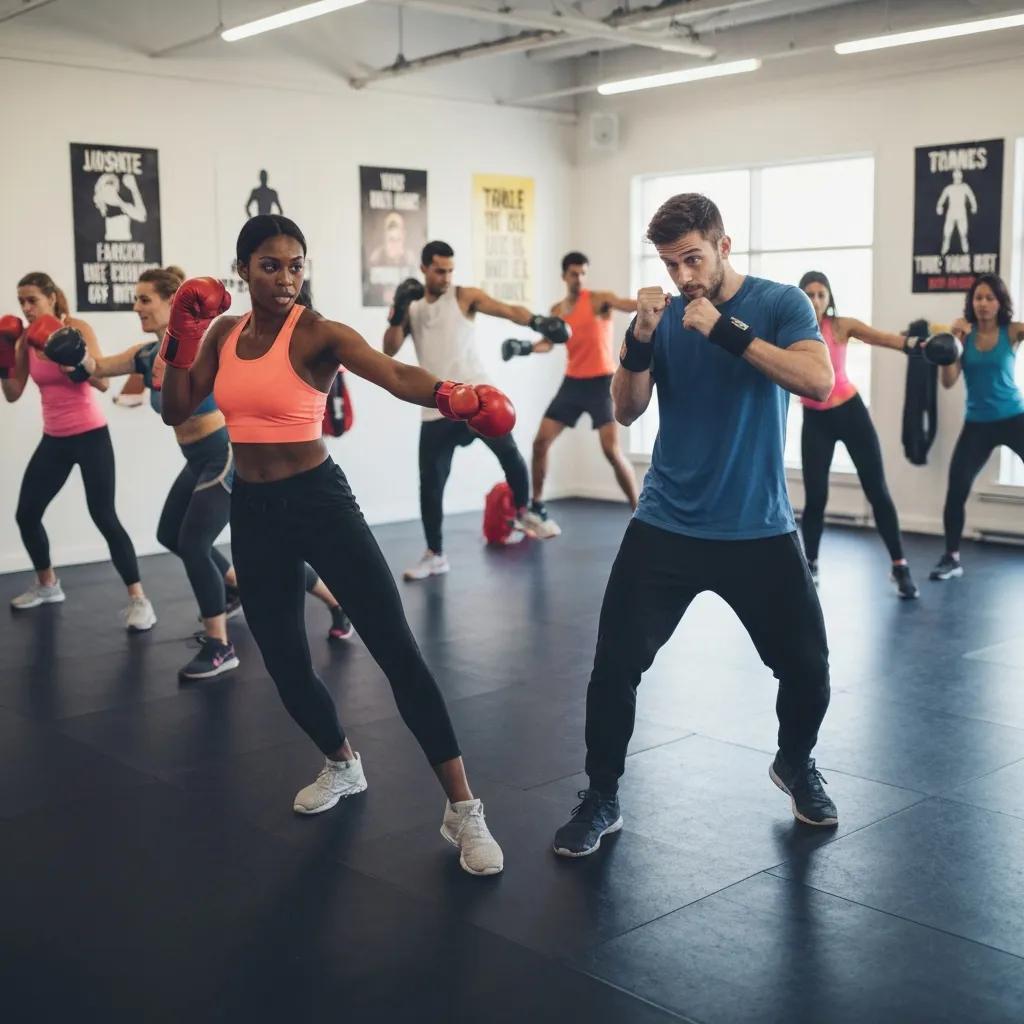
Cardio kickboxing blends martial-arts–inspired strikes with continuous movement to create a high-energy group fitness experience that improves cardiovascular fitness, coordination, and confidence. This guide explains what cardio kickboxing is, why it helps beginners build aerobic capacity and fat–loss progress, and how residents of Northglenn can start safely with a 30-minute routine they can follow today. Many newcomers worry about injury risk, not knowing the right progressions, or feeling intimidated in classes; this article addresses those concerns with clear technique cues, safety modifications, and an actionable interval plan. You will find an evidence-informed benefits overview, a step–by–step beginner roadmap, a timed 30-minute ExercisePlan with warm-up and cool-down, local class selection guidance, answers to common beginner questions, and next-step progression strategies. Throughout the guide we use practical lists, structured tables, and concise how–to instructions so you can move from reading to practicing immediately. Keywords like cardio kickboxing Northglenn, beginner kickboxing Northglenn, and 30 minute kickboxing workout northglenn are woven into the steps and tips so you can find local classes and replicate the routine at home or in a gym setting.
What Is Cardio Kickboxing and How Does It Benefit Beginners in Northglenn?
Cardio kickboxing is a group fitness class that combines basic punches and kicks with interval-style cardio to boost heart rate and burn calories; the mechanism is repeated striking patterns and timed rest periods creating aerobic and anaerobic adaptation. This hybrid approach increases coordination, balance, and full–body muscular endurance while minimizing complex combative techniques, making it well suited for beginners who want fitness results without sparring. Cardio kickboxing improves movement literacy by teaching stance, footwork, and breath control, which transfer to everyday activity and other fitness classes in Northglenn. Understanding these outcomes helps beginners pick classes and design safe at–home practice plans that prioritize form over speed.
Cardio kickboxing delivers benefits across cardiovascular, metabolic, and mental domains as shown in the table below.
What Are the Physical and Mental Benefits of Cardio Kickboxing for Beginners?

Cardio kickboxing improves aerobic capacity and muscular endurance through repeated strike sequences performed at varying intensities, which elevates caloric expenditure and promotes cardiovascular adaptation. The physical benefits include improved heart health, stronger core and hip stabilizers, and faster reaction times from practicing simple combos; these changes are measurable within weeks with regular attendance. Mentally, the focused rhythm of combinations reduces rumination and releases endorphins, so beginners often report reduced stress and increased confidence after classes. Expect practical improvements like better sleep, clearer focus, and simple weight–loss progress when cardio kickboxing is paired with modest dietary consistency.
These benefits lead naturally to a closer look at how cardio kickboxing affects heart health and stress pathways for beginners.
How Does Cardio Kickboxing Improve Heart Health and Reduce Stress?
Cardio kickboxing uses high-intensity bursts followed by recovery periods—an HIIT-style pattern—so the heart adapts by improving stroke volume and efficiency, which lowers resting heart rate and improves aerobic capacity over time. This mechanism—interval stress followed by recovery—trains both aerobic and anaerobic systems, helping beginners increase work capacity without long-duration steady-state cardio. The focused, rhythmic nature of combos promotes mindfulness through embodied movement, so cardio kickboxing reduces perceived stress by combining aerobic endorphin release with attentional shifts away from daily worries. For beginners, recommended frequency is 2–3 sessions per week at moderate intensity, progressing as comfort and technique improve, with careful attention to breathing and form to minimize injury risk.
These frequency and intensity recommendations form the foundation for starting safely and effectively in Northglenn.
How Can Beginners Get Started with Cardio Kickboxing in Northglenn?
Beginning cardio kickboxing requires simple preparation: check your baseline health, choose appropriate clothing and footwear, and plan a manageable frequency to build habit without overtraining. Start with short sessions, emphasize technique, and prioritize mobility and breathing, which reduce injury risk and speed progress. A basic starter checklist helps novices prepare for their first in–person class or at–home session and know what to expect from instructors and class formats. The following list outlines initial preparation steps to begin confidently.
Get a basic health check if you have chronic conditions and clear any exercise restrictions with a provider.
Wear supportive athletic shoes and breathable clothing to allow full range of motion.
Hydrate before class and bring a water bottle to maintain performance and recovery.
Arrive early to ask the instructor about modifications and class intensity.
Taking these preparatory actions reduces anxiety and makes the first session more productive.
What Basic Kickboxing Moves Should Beginners Learn First?
Beginners should master stance, jab, cross, hook, front kick, and roundhouse at low speed before adding power or speed; each move serves a functional purpose in combos and conditioning. Practice drills that isolate each technique—shadowboxing for punches, controlled step–throughs for kicks, and slow partner mirror drills—help build motor patterns without fatigue-driven form breakdown. Common mistakes include dropping the rear hand on kicks and overextending punches; correct these by maintaining guard and using the hips to generate power while keeping core tight. A short weekly drill plan of 5–10 minutes per technique accelerates retention and reduces the intimidation factor in group classes.
Learning these basics leads into choices about equipment and no–equipment alternatives for beginners.
What Equipment Is Needed for Beginner Cardio Kickboxing?
Beginner cardio kickboxing requires minimal equipment: supportive athletic shoes, comfortable workout clothes, and an optional pair of light gloves for bag work or added wrist support. At–home practitioners can perform the full 30-minute routine with no equipment using shadowboxing and bodyweight intervals; a yoga mat helps for floor-based core moves and cool–down stretches. Budget-friendly options include wrap–style hand protection or inexpensive boxing gloves if you plan to hit a bag; however, many group classes provide shared equipment and focus on movement rather than heavy bag work. Choosing optional gear depends on whether you prefer class–based group fitness or private at–home practice.
These equipment choices connect directly to the structure of the 30-minute routine outlined next.
What Does a First 30-Minute Cardio Kickboxing Routine Look Like for Beginners?

A beginner 30-minute cardio kickboxing routine follows a simple structure: 5-minute dynamic warm-up, 20-minute main intervals with combos and active recovery, and a 5-minute cool–down to restore mobility and breathing. The plan uses short work/rest intervals and basic combinations to build cardiovascular response while keeping technical demands low, which is ideal for someone new to kickboxing–style classes. The ExercisePlan table below presents a compact, timed breakdown you can follow for an at–home session or replicate in a Northglenn class setting. This timed layout is optimized for clarity and for featured–snippet–style queries about "30 minute kickboxing workout northglenn."
Warm-up(Light jog in place, hip circles, arm swings, torso twists)
5 minutes total; 30–60s per drill
Main set (round 1)(Jab–cross combos, front kicks, alternating low-intensity rounds)
8 minutes: 40s work / 20s rest cycles
Main set (round 2)(Hook–cross + roundhouse combos, standing core strikes)
8 minutes: 40s work / 20s rest cycles
Cool–down(Standing hamstring stretch, quad stretch, shoulder crossovers, deep breathing)
5 minutes total; hold 20–30s per stretch
This staged plan makes it simple to start and scale, and the next subsections flesh out warm-up details, key combinations, and cool–down guidance.
How Should Beginners Warm Up for a Cardio Kickboxing Session?
A five-minute dynamic warm-up primes the joints and elevates heart rate gradually through mobility and movement patterns that mirror upcoming strikes and footwork. Begin with 60 seconds of light cardio such as marching or jogging in place, followed by hip circles and leg swings to prepare hips for kicks, then shoulder rolls and arm swings to ready the shoulders for repeated punches. Each drill should emphasize control and breathing, using smooth tempo to avoid fatigue before the main set; this reduces injury risk and improves performance as intensity increases. A focused warm-up shortens the transition into work intervals and supports better technique during combos.
Warming up correctly enables practicing the core combinations safely and with better motor control.
What Are the Key Techniques and Combinations in the 30-Minute Routine?
The main set uses simple, repeatable combinations to build rhythm and cardiovascular stress while keeping technique manageable: for example, Jab (lead hand) → Cross (rear hand), Jab → Cross → Lead Hook, and Cross → Lead Roundhouse. Use 40-second work intervals where you perform steady-paced repetitions focusing on form, then take 20 seconds of active rest (light footwork or breathing). Scaling options include reducing power and increasing tempo for more cardio, or slowing movements and focusing on full technique for strength and coordination. Emphasize breath: exhale on strikes and reset stance during the rest to maintain posture and minimize dizziness.
After building technical skill in the main set, beginners should conclude with a deliberate cool–down to aid recovery.
How Should Beginners Cool Down After Cardio Kickboxing?
A five-minute cool–down with static stretches and controlled breathing helps reduce muscle tension and begins the recovery process by lowering heart rate and promoting circulation. Focus on hamstrings and calves to address kicking, hip flexors and glutes for stance, and shoulder and chest stretches for repeated punching; hold each stretch for 20–30 seconds while breathing slowly. Finish with diaphragmatic breathing for 60 seconds to encourage parasympathetic activation and faster return to baseline. Proper cool–down reduces DOMS (delayed onset muscle soreness) and helps beginners maintain consistency by minimizing discomfort between sessions.
Completing the routine in a supervised class can accelerate learning and ensure safe progression. Grinders Fitness appears to be a local fitness gym in Northglenn that offers beginner-friendly group fitness classes and promotes a free class pass for new attendees; trying a supervised class with instructor feedback is a low-friction way to scale the routine and get personalized corrections. This local option lets beginners compare how the at–home routine feels when guided, and the free class pass reduces the barrier to sampling an in–person session.
Where Can You Find the Best Kickboxing Classes and Studios in Northglenn?
Choosing the right studio involves evaluating instructor qualifications, class formats that welcome beginners, safety protocols, and community fit; these selection criteria predict a better learning experience and sustained attendance. Start by asking whether instructors emphasize technique over competition and whether classes offer beginner-specific sessions or progressive drills. Scheduling, class size, and whether the studio provides equipment or drop-in options also matter for convenience and value. The following table outlines selection criteria, why each matters, and what to look for during a trial class or studio visit.
Instructor training(Ensures safe progressions and useful feedback)
Explicit mention of coaching, beginner coaching cues
Beginner classes(Reduces intimidation and teaches fundamentals)
Intro sessions or beginner-designated classes
Class size & pacing(Affects individual attention and safety)
Smaller sizes and clear intensity scaling
Cleanliness & safety(Reduces infection risk and injured exposures)
Visible protocols and orderly equipment storage
When assessing studios during trials, use a short checklist to guide your visit and conversation with staff or instructors.
Ask about beginner-focused classes and how they structure progressions.
Observe how instructors correct form and manage class pacing.
Check whether they offer trial sessions, equipment options, and clear safety protocols.
Using this checklist during a visit clarifies whether a studio is beginner-friendly and matches logistical needs like schedule and commute.
Grinders Fitness serves as an example of a local facility that meets key beginner-focused criteria: it operates as a fitness gym in Northglenn and publicly promotes a free class pass, which is a practical way for newcomers to try a beginner-focused session without commitment. Prospective attendees can use a free class pass to evaluate instructor approach, class pacing, and community support before committing to a regular schedule. Trying multiple trial classes with different instructors helps identify the best fit for long-term adherence.
What Are the Most Common Beginner Questions About Cardio Kickboxing in Northglenn?
Beginners frequently ask about session length, frequency, safety, and whether cardio kickboxing supports weight loss goals; answering these concerns directly helps set realistic expectations. Short, practical guidelines remove uncertainty: recommended session durations, how to scale intensity, and realistic timelines for measurable fitness changes. The following list addresses common PAA-style beginner queries with concise recommendations you can apply immediately.
Common beginner questions answered briefly:
How often should I train? Aim for 2–3 sessions per week, allowing for recovery between efforts.
How long should sessions be? Start with 30–45 minutes per session, including warm-up and cool-down.
Will I get injured? Injury risk is low with proper progression; emphasize technique and rest.
How Long Should a Beginner Kickboxing Workout Be?
A beginner kickboxing workout should typically last 30–45 minutes including warm-up and cool-down to balance sufficient stimulus with recovery needs; shorter sessions are acceptable when learning new techniques. This duration allows a five-minute warm-up, a 20–30 minute main set of intervals and combos, and a five-minute cool-down—ideal for improving conditioning without excessive fatigue. As fitness and technique improve, gradually increase intensity or add an extra session rather than lengthening single workouts too quickly. Prioritizing consistent frequency over occasional long sessions yields better long-term gains and lowers injury risk.
This guidance naturally leads into how cardio kickboxing contributes to weight loss and broader fitness goals.
Can Cardio Kickboxing Help with Weight Loss and Fitness Goals?
Cardio kickboxing contributes to weight loss by providing moderate-to-high caloric expenditure through continuous movement and intervals, where consistent classes combined with modest dietary changes produce measurable results. Calorie-burn varies by intensity and body size, but typical group sessions can support a weekly calorie deficit when paired with nutrition adjustments. Beyond calorie burn, kickboxing builds lean muscle and improves metabolic rate by engaging large muscle groups through kicks, punches, and core stabilization. For sustainable results, combine regular cardio kickboxing with resistance training and balanced nutrition while tracking progress with simple measures like energy levels, clothing fit, and performance improvements.
These realistic expectations help inform progression choices in the next section.
How Can Beginners Progress Beyond Their First Cardio Kickboxing Routine?
Progression after the beginner stage focuses on refining technique, introducing controlled power, adding targeted strength work, and increasing conditioning specificity to continue improvements safely. Effective progression strategies include focused technique sessions, structured bag work for power development, and two to three strength sessions per week emphasizing compound lifts and core stability. Tracking progress through measurable goals—like longer continuous intervals, sharper combos, or higher-rep strength targets—keeps training purposeful and reduces plateaus. A balanced roadmap blends technical, conditioning, and mobility work to produce long-term gains while minimizing overuse injuries.
The following list suggests actionable next steps for steady progression beyond the beginner phase.
Schedule dedicated technique sessions and separate conditioning days to isolate skill development and aerobic work.
Add strength training 2× per week to boost power and resilience for harder strikes and longer sessions.
Monitor workload and recovery to avoid overtraining; use objective markers like sleep quality and performance consistency.
What Are Effective Ways to Improve Kickboxing Skills After the Beginner Stage?
Effective advancement emphasizes deliberate practice: break down complex combos into component movements, use slow-motion technical drills, and add bag work with short focused rounds to develop power and timing. Partner drills, light sparring with protective gear, and instructor feedback accelerate motor learning and reveal mechanical faults that solo practice can miss. Video analysis and coaching cues help refine posture, hip rotation, and weight transfer—key contributors to more effective, safer strikes. Balance technical refinement with conditioning to ensure the skill improvements are supported by sufficient energy systems and muscular endurance.
Improving these technical attributes supports the broader adaptations discussed next.
How Does Consistent Cardio Kickboxing Enhance Strength, Flexibility, and Endurance?
Consistent cardio kickboxing produces integrated physical adaptations: repeated striking and stance work develops muscular endurance and functional strength, dynamic kicks and mobility drills improve hip and hamstring flexibility, and interval training enhances both aerobic and anaerobic endurance. Over 6–12 weeks, practitioners usually notice improved stamina, greater range of motion in hips and shoulders, and increased muscular tone without excessive hypertrophy. To quantify progress, track metrics like longer continuous rounds, reduced perceived exertion at a fixed intensity, and improved movement quality during technique drills. A training cadence of 3–4 sessions weekly, mixing technical, strength, and conditioning work, delivers balanced improvements across these domains.
These measurable improvements complete the progression roadmap and prepare beginners to keep advancing safely in Northglenn.
Frequently Asked Questions
What should I wear to my first cardio kickboxing class?
For your first cardio kickboxing class, it's essential to wear comfortable, breathable athletic clothing that allows for a full range of motion. Supportive athletic shoes are crucial to provide stability and cushioning during high-impact movements. Avoid overly loose clothing that may get in the way of your movements. Additionally, consider bringing a water bottle to stay hydrated throughout the session. Dressing appropriately will help you feel more confident and focused on your workout.
How often should I practice cardio kickboxing for optimal results?
For optimal results, beginners should aim to practice cardio kickboxing 2 to 3 times per week. This frequency allows your body to adapt to the workouts while providing adequate recovery time between sessions. Consistency is key to improving cardiovascular fitness, coordination, and strength. As you become more comfortable with the movements and your fitness level increases, you can consider adding additional sessions or varying the intensity to continue challenging yourself.
Can I do cardio kickboxing at home, or is it better in a class setting?
While cardio kickboxing can be effectively practiced at home, attending a class offers unique benefits such as structured guidance, motivation from instructors, and the energy of a group environment. Classes often provide immediate feedback on your technique, which can enhance your learning experience. However, if you prefer to practice at home, you can follow online workouts or use the routines outlined in this guide. Both options can be effective, depending on your personal preferences and goals.
What should I do if I feel overwhelmed in my first class?
If you feel overwhelmed in your first cardio kickboxing class, remember that it's completely normal to experience this as a beginner. Focus on your breathing and take breaks as needed. Don't hesitate to ask the instructor for modifications or clarification on techniques. Many participants are in the same boat, and instructors are trained to help newcomers feel comfortable. Embrace the learning process, and remind yourself that improvement comes with practice and time.
Conclusion
Cardio kickboxing offers a dynamic way for beginners in Northglenn to enhance cardiovascular fitness, coordination, and confidence through structured workouts. By following a clear roadmap and utilizing local resources, newcomers can safely progress while enjoying the numerous physical and mental benefits of this engaging fitness style. Embrace the journey of fitness by trying a class at Grinders Fitness or exploring our detailed workout plans to kickstart your kickboxing experience. Start your transformation today and discover how cardio kickboxing can elevate your health and well-being.
